
Editor’s Note: this article was written by CUNY SPS contributing writer Tanzina Vega.
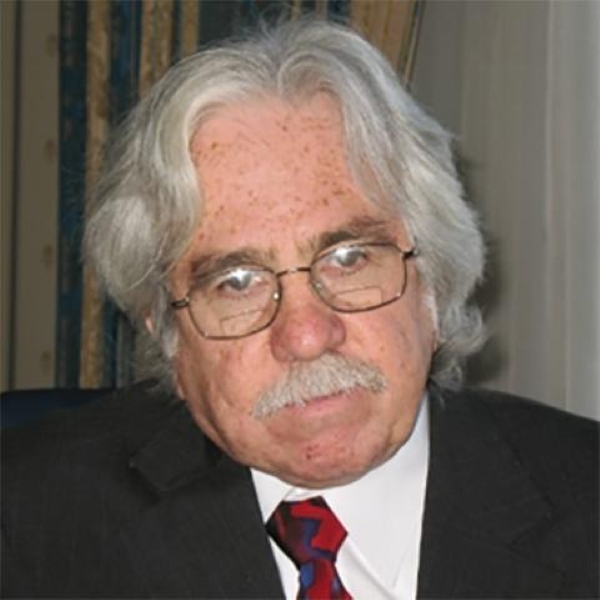
For decades, Dr. Mark G. Friedman has worked to advance the rights, community inclusion, and self-determination of people with developmental disabilities. As the CUNY School of Professional Studies (CUNY SPS) recognizes National Disability Employment Awareness Month this October, Dr. Friedman, a pioneering disability rights activist and adjunct associate professor in the School’s Disability Studies programs, shared his thoughts on how far the world for people with developmental disabilities has come.
Long before teaching at CUNY SPS, Dr. Friedman worked for the Office of the Special Master of the Federal Court in the landmark Pennhurst case, filed in 1974 by the Pennsylvania Association for Retarded Citizens and the Public Interest Law Center. The litigation reached the U.S. Supreme Court three times and helped establish that every person with developmental disabilities had rights as a citizen, including the right to treatment and the protection of the law. In 1978, the court ordered that all Pennhurst residents be provided with community living arrangements and the support services they needed. Most importantly, the case resulted in moving everyone out of the institution into three-person homes in the community. “No one can be rehabilitated in an institution by its very nature,” said Friedman.
Twenty years of demonstrations, advocacy, and ultimately, “getting people out of institutions,” is what, Dr. Friedman said, has influenced his pedagogy. “I bring that to the teaching. My life's work has been empowering people with disabilities to gain their voice.”
Dr. Friedman has also brought his work across the country training people to work with disabled Americans. In Pennsylvania, he directed a service coordination office. In Nebraska, he facilitated leadership development retreats. He has also worked on creating the National Museum on Disability Rights.
“Disability is always in the news,” said Dr. Friedman. That’s especially true today with the Trump administration’s layoffs at federal agencies charged with enforcing civil rights protections. “Back in the day the courts were the avenue for obtaining civil rights, but before that they weren't. That's what we are seeing today.” The weakening of agencies like the EEOC (Equal Employment Opportunity Commission) and others could also weaken hard-earned protections for disabled Americans. Dr. Friedman is also concerned about the clawback of policies that enabled more disabled people to work from home during the COVID-19 pandemic.
Broader conversations about being disabled also trouble him. “It's common for people to say ‘If I were disabled, I'd rather be dead,’ and their negative perception of the lives of people with disabilities,” he said. He’s also concerned about the rise in genetic testing for expectant parents. The medical profession is “more prejudiced against people with disabilities than the general public,” said Dr. Friedman. “Their premise is to have a perfect baby. It's a very difficult position.”
One area of promise Dr. Friedman sees for empowering disabled Americans, particularly those who want to enter the workforce, is the implementation of technologies like artificial intelligence. Through My Tech For All, which Dr. Friedman co-founded with his wife and fellow CUNY Professor, Dr. Ruthie-Marie Beckwith, he helps people with disabilities use technology on their own. He shows people “how to get online and turn on their web camera.” He’s since expanded this to include technologies like the personal assistants Siri and Alexa, FaceTime, movement sensors, medication reminders, remote support systems, and GPS tracking. For example, AI can help someone prepare for a job interview by simulating interview questions and voice technology can help someone follow a recipe. These findings have been shared by Dr. Friedman at recent conferences in Georgia and Tennessee and in this Mother Jones article on using Meta Smart Glasses.
More recently, Dr. Friedman and colleagues attended a special Smithsonian-sponsored seminar on "Teaching Disability History" at the Senator Harkin Institute in Des Moines, Iowa. He has also conducted on-site research at the Wolfensberger Archives at the University of Nebraska Medical Center in Omaha, Nebraska.
“My approach to disability is one of empowerment. Giving voice to people with intellectual and developmental disabilities,” Dr. Friedman said. “Success to me is somebody having an ‘Ah Ha’ moment. People will come up to me and say ‘Mark, you changed my life.’”
About the CUNY SPS Disability Studies Programs
Disability Studies is an emerging academic field that explores disability from multiple perspectives, including the social sciences, humanities, science, and the law. The CUNY School of Professional Studies (CUNY SPS) offers groundbreaking, fully accredited programs within Disability Studies. The School’s offerings include a BA, Advanced Certificate, and MA in Disability Studies, an Advanced Certificate and MS in Disability Services in Higher Education, and an Advanced Certificate in Disability Advocacy.
About the CUNY School of Professional Studies
As New York's leading online school since 2006, the CUNY School of Professional Studies (CUNY SPS) offers the most online bachelor's and master's degree options at the City University of New York, and serves as the University's first undergraduate all-transfer college. With 26 degrees and numerous other non-degree and grant-funded workplace learning programs, CUNY SPS meets the needs of adults who wish to finish a bachelor's degree, progress from an associate's degree, earn a master's degree or certificate in a specialized field, and advance in the workplace or change careers. Consistently ranked highly by U.S. News & World Report for its online offerings, CUNY SPS has emerged as a nationwide leader in online education. The School's renowned and affordable online programs ensure that busy working adults may fulfill their educational goals on their own time and schedule.
Press Contact
Prerna Dar
CUNY SPS Chief Marketing Officer
Prerna.dar@cuny.edu